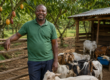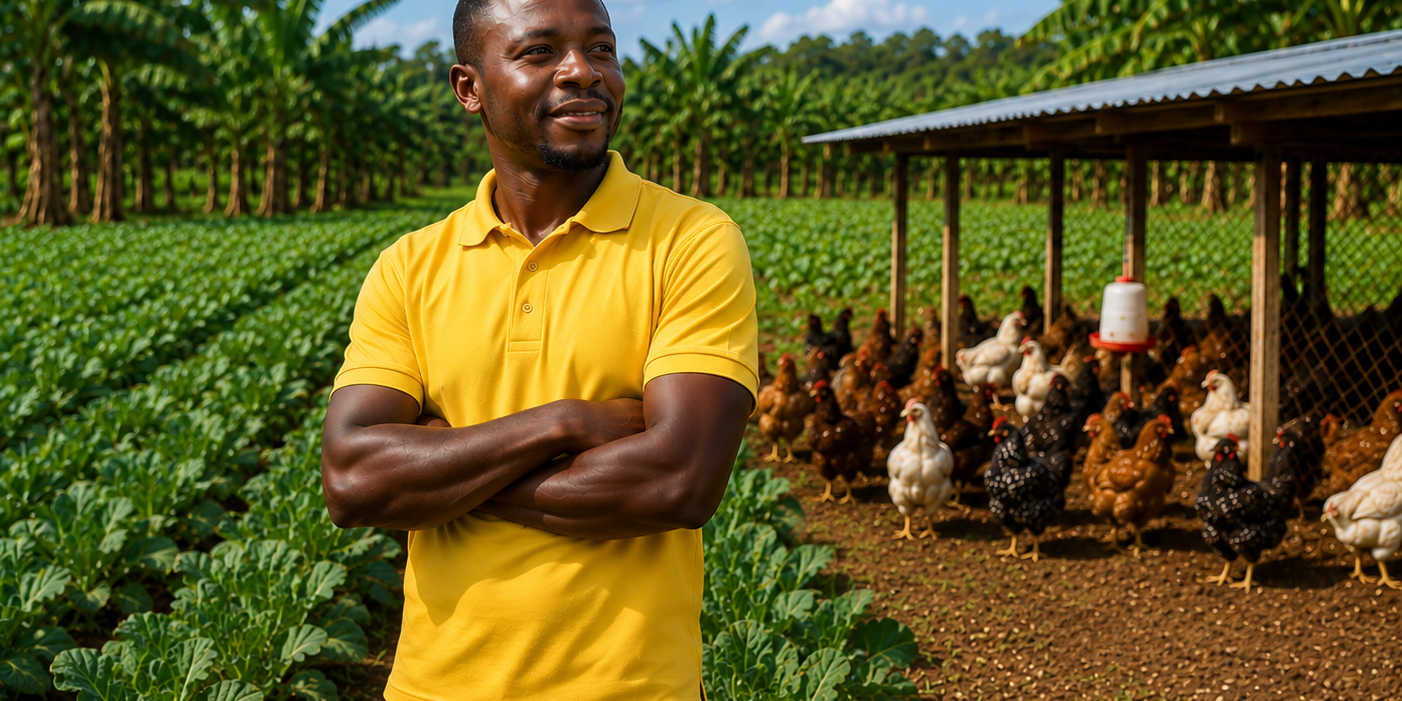
For Yaw Kwakye of the Nyame Adoye group at Adontehene, farming has always been the mainstay of his livelihood. But like many farmers, Yaw has found that increasing production costs and declining profitability have made it increasingly difficult to rely on farming alone to provide the financial security his family needs.
Rather than accept this as his reality, Yaw began looking for ways to diversify his income. Alongside crop farming, he ventured into poultry production and land agency services, and invested in an eight-bedroom rental property. These additional investments have created new sources of income throughout the year, reducing his dependence on seasonal farming and giving his household greater financial stability.
The change has also influenced how Yaw thinks about his family’s future. With greater financial stability, he is no longer focused only on meeting immediate household needs. His next goal is to establish a small retail shop for his wife, creating another income stream and giving her an opportunity to contribute more directly to the family’s economic wellbeing.
“Farming alone is no longer profitable. Diversifying my livelihood has given my family greater financial security. My next dream is to open a shop for my wife so that together we can build a more stable future.”
Yaw’s journey reflects an important part of PDA’s approach to Village Savings and Loan Associations (VSLAs). The groups provide members with a structured way to save, access credit and build financial resilience, but they also serve as platforms for strengthening the knowledge and skills needed to make better livelihood decisions. Through capacity building in financial literacy and farmer business skills, members are supported to think more deliberately about income, investment, enterprise development and long-term financial planning.
The VSLA platform also creates space to address issues that shape household economic wellbeing beyond income alone. Sessions on gender transformation encourage members to examine decision-making, roles and opportunities within the household, while child protection discussions strengthen awareness of children’s rights, safety and wellbeing. In this way, the groups bring financial and social dimensions of resilience together.
For Yaw, diversification has opened up possibilities beyond simply coping with declining agricultural returns. His investments have given his family more than one source of income, while his ambition to establish a business for his wife points towards a future in which both partners can contribute to the household’s economic security.
Yaw’s story demonstrates that livelihood diversification isn’t simply about finding another way to earn money. With the right knowledge, skills and support, it can become a deliberate strategy for managing risk, strengthening household resilience and creating opportunities for families to build a more secure future together.
Key Outcomes
- •Diversified into poultry production, land agency services and rental property
- •Reduced dependence on seasonal farming income
- •Gained capacity building in financial literacy and farmer business skills
- •Planning a retail shop for his wife as a new household income stream